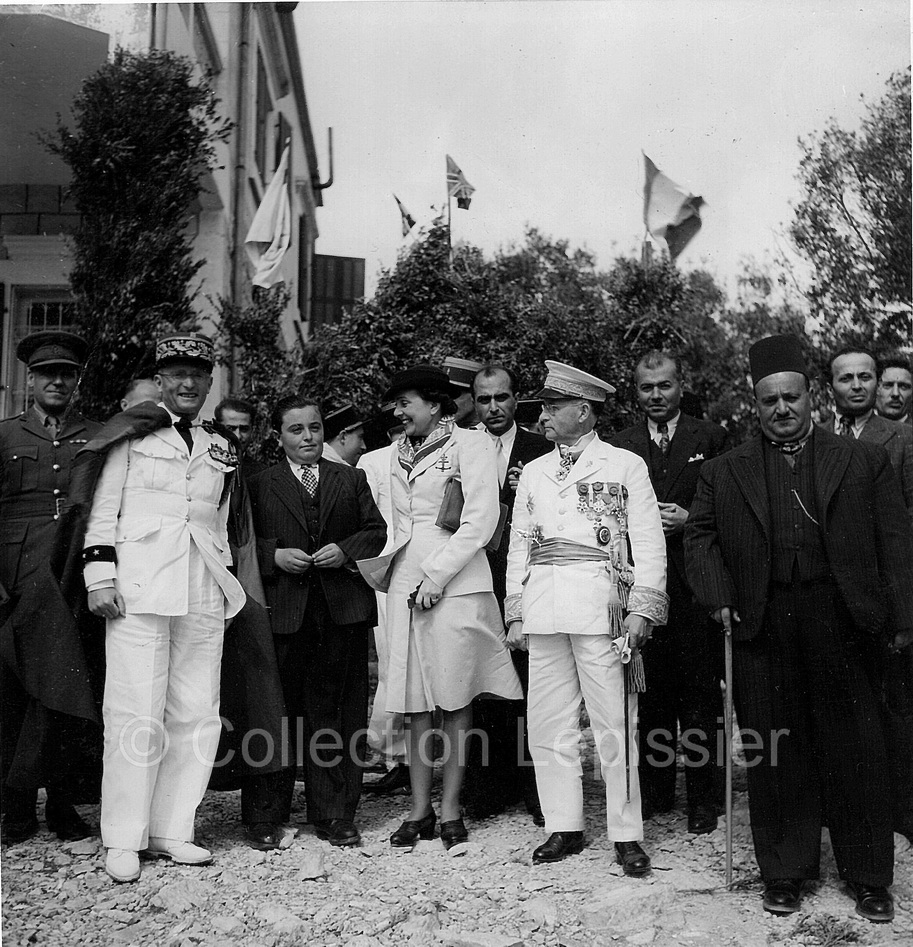
The first postings (1907-1923) : Saudi Arabia, Iran, Morocco, Egypt, Turkey
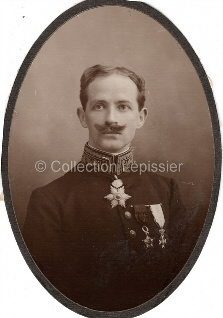
Paul Lépissier was born on 17 janvier 1884 in Canton (Guǎngzhōu – 广州). He was the second child of Laurent and Blanche Lépissier.
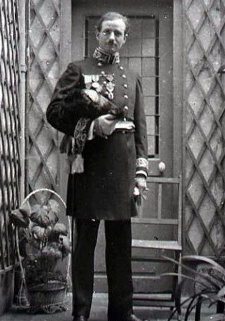
Like his brother Charles, Paul was quickly sent to France for his primary and secondary schooling. He followed in his elder brother’s footsteps: after a bachelor’s degree in law and a diploma in Oriental languages (in vernacular Arabic, Farsi and Turkish), he became a diplomat.
He began his career in 1907 in Jeddah, in Saudi Arabia, then in 1911 he was posted to Iran for 2 years.
In 1913, he found himself in Morocco, in Rabat, then in Casablanca, as 'drogman'.
Paul Lépissier was mobilised on 4 August 1914 in Casblanca. He was assigned to the reserve battalion of the Chaouia region, in a marching regiment of the colonial infantry.
From 1916 to 1918, Paul Lépissier was in post in Egypt, before being posted at large in September 2018 at the disposition of the General Residency of Morocco (of which Marshal Lyautey was the General Resident).
In November 1918, Paul was named to Trabzon in Turkey on the Black Sea, with the High Commissariat in Constantinople.
In November 1921, Paul was Deputy to the Chief of the “French Mission” in Adana in Cilicia (or “Little Armenia”).
Posts in Syria and Iraq (1924-1937)
In May 1924, Paul Lépissier was posted at large at the disposition of the High Commissariat of Syria in Damascus, and at the end of May 1924 he was named Deputy General Secretary of the High Commissariat. In December of the same year, he was named acting General Secretary.
In November 1925, Paul was confirmed as acting General Secretary of the High Commissariat in Damascus, until 1927.
In December 1928, Paul Lépissier left for Baghdad, in Iraq, as Consul.
On 6 January 1930 at Saint Joseph’s Cathedral of the Carmelite mission of Baghdad, he married Louise Caroline (“Line”) Berthollet (born on 15 October 1886 and deceased in Beirut on 3 February 1949).
In December 1929, Paul was named "chargé d'affaires" then Consul General in January 1933.
In January 1936, he was charged with creating the post of the manager of the French legation in Baghdad before being named Minister Plenipotentiary in May 1936.
Ambassador in Thailand and agent of the Free France (1937-1954)
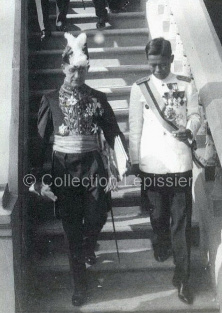
In August 1937, Paul Lépissier was named extraordinary envoy and minister plenipotentiary in Bangkok, Thailand.
Admiral Decoux, Governor General of Indochina since 25 June 1940, replacing General Catroux, considered that Paul Lépissier, deeply anti-Vichy, was playing too personal a game and asked that he be replaced by Roger Garreau.
In 1940, Paul refused the Ministry of Foreign Affairs’ proposal for a post in Venezuela. De Gaulle encouraged him to join the Free France.
He was the first diplomat (Minister Plenipotentiary) in charge of a French Legation or Embassy to join General de Gaulle.
In 1941 he was named chief of cibil services of the Free France in the Levant, then for Jerusalem, and in June 1941, he joined General Catroux’s military staff as director of political services and propaganda of the General Delegation of the Free French Forces. Paul met Georges Catroux when the latter was Governor General of French Indochina and Paul ambassador to Thailand.
On 14 July 1941, he was named chief of the delegation charged with discussing the arrival of the Allies in Beirut with General Dentz’s representatives.
Knowing the Middle East well and particularly the Levant where he had already been stationed, Paul found that the policy pursued by France Combattante in this region was disastrous and made this known.
In August 1941 was degraded by the Vichy Government, without pay, and struck from the register of the Légion d'honneur. In September of the same year, all of his assets (in banks, property and goods) were confiscated.
Paul also became president of the Human Rights League (Beirut section). Paul is an idealist. He had very fixed opinions, very republican and fairly left wing.
By a decree of 22 March 1943, Algiers oust Paul Lépissier from his post. He was replaced by Yves Chataigneau from 1 April. Paul, because of his strong criticisms of the policies conducted in the Levant (and his position as president of the League of Human Rights and his fairly firm, very republican, clearly and strongly expressed opinions) is disturbing.
On 8 June 1943, Jean Helleu was appointed by the CFLN as High Commissioner to the Levant, succeeding General Georges Catroux.
Still criticising the CFLN's position in the Levant, Paul Lépissier asked, in January 1944, to be placed at the disposal of General Paul Beynet, the new High Commissioner in the Levant as soon as he arrived.
To support himself, Paul worked from January 1944 as Counsellor to the general management of the Iraq Petroleum Company in Haiffa, with the whole of the Middle-East as his jurisdiction.
He was informed, by a letter from the secretary general of the General Delegation of Fighting France in the Levant, that his wages would be stopped and he was invited to retire in June 1944.
On 8 June 1943, Jean Helleu was appointed by the CFLN as High Commissioner to the Levant, succeeding General Georges Catroux.
At Liberation, he was of course reinstated in all his rights, with retrospective effect.
He was appointed Minister Plenipotentiary of 1st class, the highest grade, retroactively from 1 January 1942.
Paul, as well as a number of other decorations, received the commemorative medal for voluntary services in the Free France.
In September 1946, Paul Lépissier officially left the Ministry of Foreign Affairs and retired from French administration.
Paul Lépissier and his wife Line stayed in Beirut. Line died on 3 February 1949 and Paul on 9 May 1954. They are both buried in Lebanon.
§§§§§§§§§§§§§§§§§§§§§
The following tab will allow you to have more information on Paul Lépissier's career path : 'Book on Paul Lépissier'.
You will also find, in sub-tabs, archive documents (340) and photographs (237) concerning Paul Lépissier
(Only available to members of the Association Émile-Jean Lépissier).
§§§§§§§§§§§§§§§§§§§§§