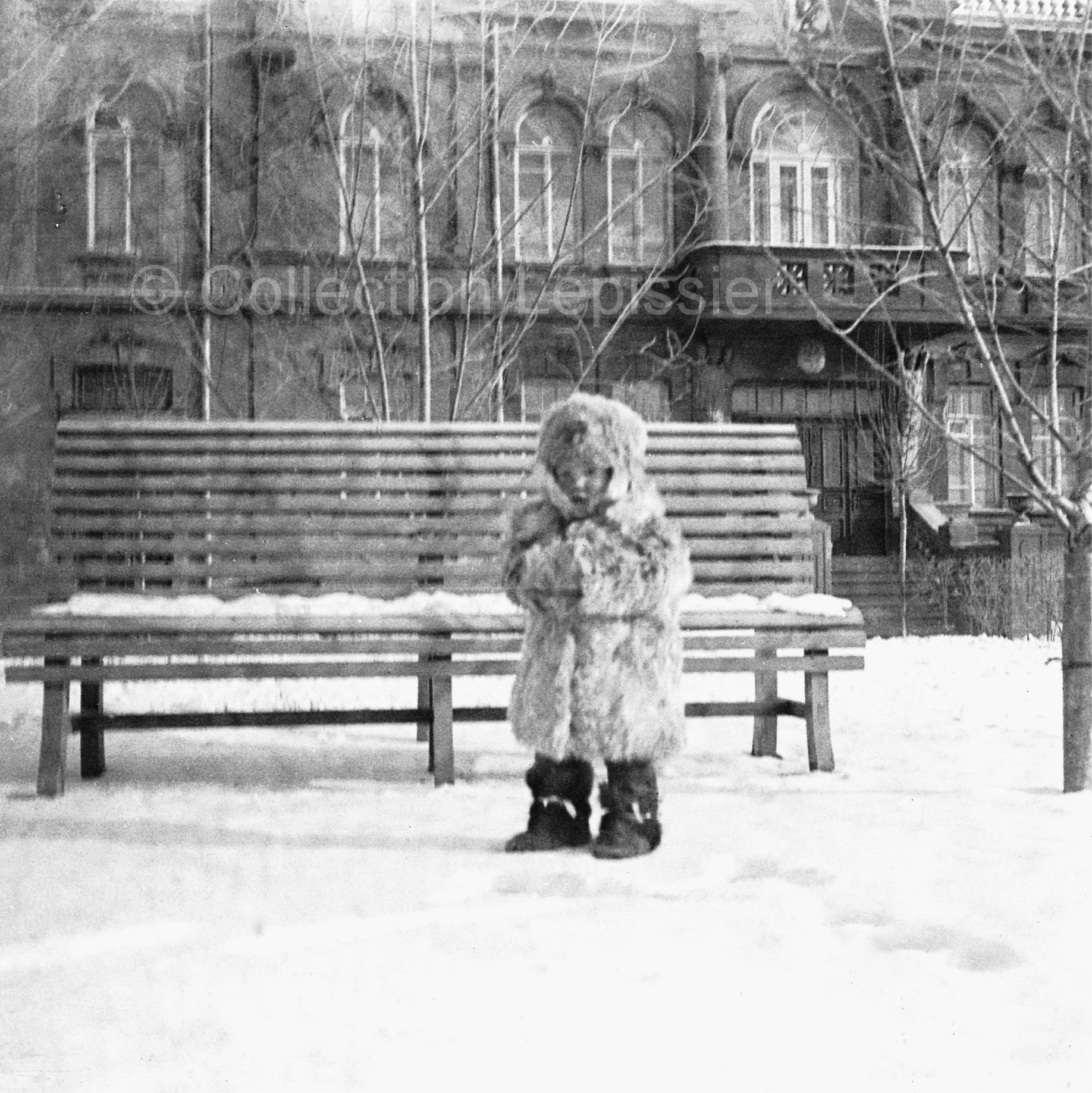
1922 – Henri Lépissier in front of the consulate in Hā'ĕrbīn in Mandchouria
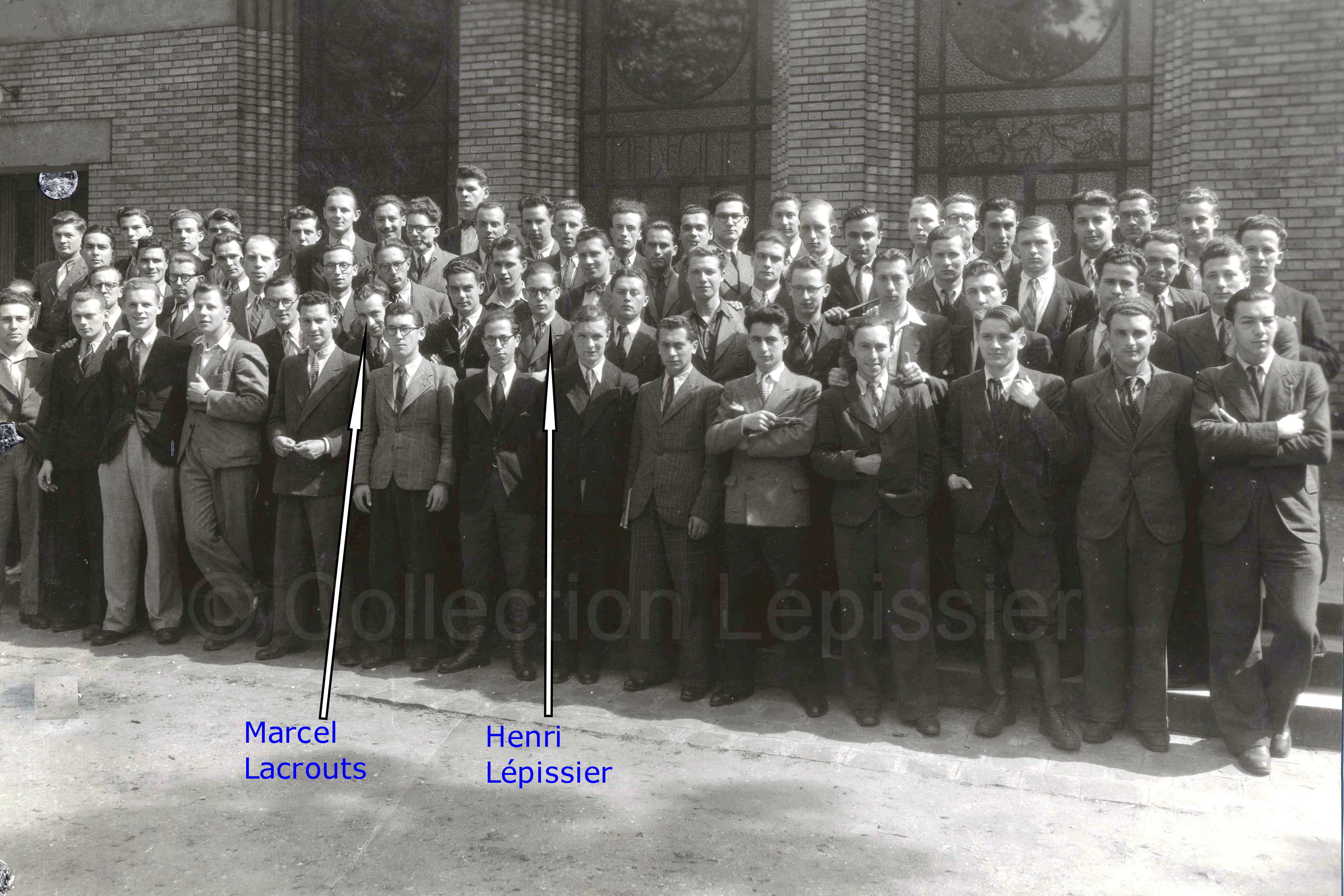
1945 – Cohort of the veterinarian class of Maisons-Alfort
1950 – Henri Lépissier in Fort-Lamy, Chad

1961 – Fort-Lamy – Henri Lépissier and Béatrice with the lion cubs
 - Copie.jpg)
1962 – Henri Lépissier in Kano, Nigéria

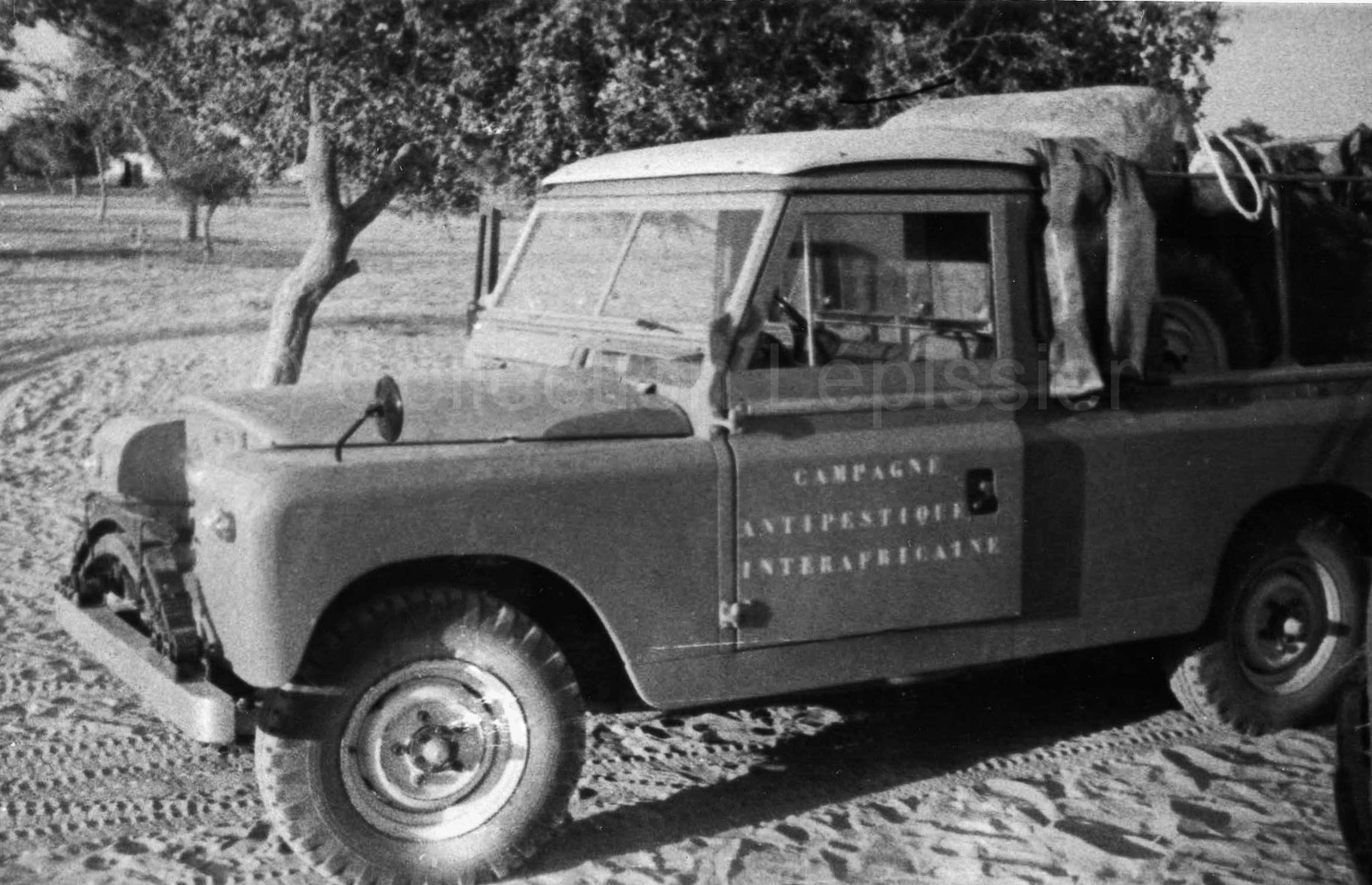
June 1967 - Dakar - Truck used in the vaccination campaign against rinderpest
Below is a short biography of Henri Lépissier
Henri Eugène Émile Lépissier, was born Wednesday 6 april 1921 in Hā'ĕrbīn (哈尔滨), located in the province of Hēilóngjiāng (黑龙江省), in Mandchuria, where is father Charles was the consul. He was baptised in the Russian orthodox cathedral of Hā'ĕrbīn by a Catholic priest from the mission of Fou Kou Tien, outside of Hā'ĕrbīn.
After his annual vacation in October 1925, Charles Lépissier takes up his new post in Yúnnánfu (present day Kūnmíng – 昆明), in south China (Yunnan), succeeding Albert Bodard. Henri starts school in the small French school of Yúnnánfu. He goes to school either carried on a chair or on the back of a donkey. After a vacation in France, his father is posted in Tientsin (Tiānjīn – 天津) at the beginning of 1931, and they return to China. Henri continues his schooling – both in French and in English – as a boarder for a year with the Maristes brothers at the school Saint Louis of Tiānjīn and then in the small French school that was created in 1932 by the consul Charles Lépissier.
Henri is 12 years old when he leaves China in September 1933. He starts 7th grade in boarding school at the Lycée Pothier in Orléans. He stays there until June 1935. His correspondent in France is his paternal grandmother, Blanche Lépissier (née Berthoin) who lives at her daughter’s Claire Benoist.
His father Charles buys a townhouse located 6 rue Neuve Notre-Dame in Versailles in 1935. He appoints Ms. Jeanne and Ms. Marguerite Caron, two retired school teachers, to look after the house, and take care of Henri and his sister Geneviève, who returned from China in September 1935. At that time Henri starts 9th grade at the Lycée Hoche in Versailles. In June 1939, he sits for the first part of his baccalaureate at the Lycée Condorcet in Paris and sits for his baccalaureate of philosophy at the end of June 1940 in Bordeaux, in a special session organized for refugees. He passes both exams.
Henri starts Veterinary School at Maisons-Alfort, on 3 November 1940. He becomes a Doctor of Veterinary Medecine as part of the graduating class of 1945. He also has a diploma from the Institute of Breeding and of medecine in virology and tropical pathology, after being trained at the Institut Pasteur. Additionally, he follows a training in tropical fauna at the Museum of Natural History in Paris.
Henri becomes a civil servant in the Ministry of Agriculture in April 1946 and is posted overseas. He is appointed to the division of breeding in Fort-Lamy, Chad, in 1947.
Before leaving France, he gets married to Monique Mourier on 30 July 1947 in Versailles. Monique is the daughter of Marguerite, née Soulé (the daughter of the general of cavalry François William Soulé) and of the controller general of aeronautics Paul Mourier (the son of general of the infantry Joseph Mourier).
Henri speaks English well, and is confortable in Nilotic Arabic. He spoke a little bit of Russian when he was a child. He is a member of the French Society of the Explorers and Travellers and of the National Geographic Society of the USA.
Henri will spend his entire professional career in Africa.
From 1948 to 1958, he is the deputy director of the veterinary and breeding division in Chad. Henri is elected to the Assembly of Chad as an Advisor and serves in the “Assemblée territoriale” between 1952 and 1959.
His eldest son, Bertrand, is born in Fort-Lamy (present day N’Djamena) on 4 September 1948, and his second son Hervé is born on 31 August 1949 in Libourne (France). Henri and Monique separate in 1955 and subsequently get divorced.
Henri marries his second wife, Jacqueline Delaunay. Gérard is born in 1957. From 1959 to 1961, Henri is the director of the veterinary and breeding division of Chad. Henri will continue his career in Africa with Jacqueline, Gérard, and Béatrice (the daughter of Jacqueline’s previous marriage).
Between 1961 and 1969, Henri is an international civil servant with the Scientific Technical and Research Commission of the Organisation of African Unity. In this capacity, he leads the “Joint campaign against bovine pest in Central and West Africa”. He is then posted :
- In Kano, Nigeria (1961-1964)
- In Ouagadougou, Haute-Volta, present day Burkina-Faso (1965-1966). On 18 February 1965, Henri is the victim of a serious car accident in Bougouni, Mali. The driver of the car, not fully awake, missed a bridge and the car ended up in a riverbed of the Baoulé river, which was thankfully dry. Henri suffered a broken ankle and stayed 6 hours in full sun before being rescued. He was left with a small limp for the rest of his life.
- In Dakar, Senegal (1967-1969).
Between 1969 and 1971, Henri is seconded to the United States Agency for International Development (USAID) in Dakar as a regional advisor for rural development of West Africa.
From 1972 to 1976, he is the technical advisor for the rural development of Senegal and is a member of ministerial cabinets of the Senegalese government.
On 24 July 1976, Henri leaves Africa after 30 years of service on the continent and retires from the French administration. He is 55 years old.
Between 1977 à 1980, he is an engineer for the rural development of developing countries for the company Louis Berger International. Between 1980 and 1984, he is an independant expert consultant and conducts missions in Africa for various international organisations and universities.
His son Hervé, a radiologist, dies on 23 April 1984 at the age of 35.
Between 1983 and 1988, Henri is a municipal councilor for the city of Rambouillet, as part of the party list of Gérard Larcher, a senator and the mayor of Rambouillet, and also a fellow veterinarian. Between 1989 and 1995, he is the deputy mayor of Rambouillet. Between 1997 and 1999, Henri is the vice president of the hospital of Rambouillet.
In 1989, he publishes the book : “Treizième parallèle (1948-1984) – Miscellanées de témoignages, souvenirs et anecdotes" (“Thirteen parallel – 1948-1984 – Miscellaneous memories, anecdotes, and testimonies”) sponsored by the French Society of Explorers and Travellers (see next tab).
Henri passes away in Rambouillet, on 28 Octobre 2010, at the age of 89. He is buried in Rambouillet. Gérard Larcher wrote the following for Henri’ s funeral : “Henri was a committed and dedicated man, a loyal man, a man who did good and who held deep humanistic values. I remember a man of great intellectual rigor. Dear Henri, we will not forget you”.
Henri is an Officer of the National Order of Merit, Officer of the Order of Agricultural Merit, Officer of the National Order of the Lion (Senegal), and Officer of the National Order of Chad.
§§§§§§§§§§
You will find 4 sections in the tabs of this chapter :
- The book 'Treizième parallèle' written by Henri Lépissier (Publicly available)
- An e-book with the detailled biography of Henri Lépissier (In construction – Only available to the members of the Association Émile-Jean Lépissier)
- Documents about Henri Lépissier (In construction – Only available to the members of the Association Émile-Jean Lépissier)
- Photograps related to Henri Lépissier (In construction – Only available to the members of the Association Émile-Jean Lépissier)
© Tous droits réservés
Redirections :
- Go to 'Legal Notices & GDPR' (Publicly available)
- Go to 'Paul Lépissier (1884-1954)' (Publicly available)
- Go to ‘Madeleine Lépissier (1891-1986) et la famille Gerber'
- Go to 'Émile Lépissier (1900-1969)' (Only available to members of the Association Émile-Jean Lépissier)
- Go to 'Jacques Lépissier (1931-2009)' (Publicly available)
- Go to 'Bertrand Lépissier' (Only available to some members of the Association Émile-Jean Lépissier)